Showing posts with label Light. Show all posts

Monday, March 10, 2008

Light and Chemistry - Triboluminesence


Lesson: Breaking molecular bonds can release energy in the form of light
What Happened: We crunched Altoids in a dark room and saw blue-white sparks.

Traditionally, this demonstration is done with Wint-O-Green Lifesavers -- but the package I found at the supermarket listed only artificial ingredients. What makes the candy spark visible is the fluorescent property of wintergreen's aromatic essence, methyl salicylate. So we tried Altoids and Canada Mints. At night, we went into the bathroom (so we could see ourselves in the mirror), turned off the lights and waited a few minutes for our eyes to adjust to the dark. The Altoids worked well. The Canada Mints are slightly more chewy and hence, did not crunch well.

The website How Stuff Works explains the process like this:
Triboluminescence occurs when molecules, in this case crystalline sugars, are crushed, forcing some electrons out of their atomic fields. These free electrons bump into nitrogen molecules in the air. When they collide, the electrons impart energy to the nitrogen molecules, causing them to vibrate. In this excited state, and in order to get rid of the excess energy, these nitrogen molecules emit light -- mostly ultraviolet (nonvisible) light, but they do emit a small amount of visible light as well. This is why all hard, sugary candies will produce a faint glow when cracked.
Although it was fun to watch the bright flashes of light in our mouths, we had to stop after a few candies because the sharp mintiness got to us.


A photo of the flash, from Wayne's This and That:
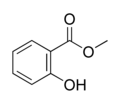


Interestingly, as I learned from Wikipedia, methyl salicylate, or C6H4(HO)COOCH3, is what gives Ben-Gay its minty heat. It can cause poisoning and even death when eaten or applied to the skin in large amounts.

Curiously strong, indeed.

Wednesday, March 5, 2008

More Light and Chemistry-A Homemade Spectroscope


In Oliver Sacks' book Uncle Tungsten: Memories of a Chemical Boyhood, he describes walking around with a pocket spectroscope, observing the bright and dark lines in the spectra of different types of light sources.

Instead of buying the lovely model above from Educational Innovations, however, we followed Simon Quellen Field's directions for a home-made spectroscope on his website scitoys.com. (It's also in his book,Gonzo Gizmos: Projects & Devices to Channel Your Inner Geek.)

Here's Field's explanation of what's going on:


A spectroscope is a device that lets us find out what things are made of. It works by taking light and splitting it up into its component colors. Different elements make different colors when they glow. We can make objects and gasses glow by heating them up in a flame, or by passing electricity through them. The spectroscope spreads out the colors of the light, and we can identify the elements by the bright lines we see in the spectroscope.
We pretty much followed Field's directions, except for using duct tape instead of aluminum tape.


The razor blade slit, which is where the light comes in, was also finished off with duct tape. I forgot to take a picture of the placement of the DVD; we measured the distance from the slit to the end of the box and marked a line for the left edge of the disc. (See Field's directions to figure out what I'm talking about.)

We used it on incandescent and fluorescent bulbs and sunlight, and it seems to work pretty well. I noticed that along with the spectrum, you get a pinhole camera effect. We'll have to find some other light sources to test it out on.

Saturday, March 1, 2008

Black Light


From About.com's Chemistry Page

There are a lot of everyday materials that fluoresce, or glow, when placed under a black light. A black light gives off highly energetic ultraviolet light. You can't see this part of the spectrum, which is how 'black lights' got their name. Fluorescent substances absorb the ultraviolet light and then re-emit it almost instantaneously. Some energy gets lost in the process, so the emitted light has a longer wavelength than the absorbed radiation, which makes this light visible and causes the material to appear to 'glow'. Fluorescent molecules tend to have rigid structures and delocalized electrons.
(The black light fluorescent bulb, with holder, was $10 at Wal-Mart. It can be plugged in and moved around wherever needed. We also have an incandescent black light bulb, but it doesn't work very well, and gets very hot.)

What we got to glow:

White Paper

White paper is treated with fluorescent compounds to help it appear brighter and therefore whiter. Sometimes forgery of historical documents can be detected by placing them under a black light to see whether or not they fluoresce. White paper made post-1950 contains fluorescent chemicals while older paper doesn't.

Tonic Water

The bitter flavoring of tonic water is due to the presence of quinine, which glows blue-white when placed under a black light.


Laundry Detergent

Some of the whiteners in detergent work by making your clothing a bit fluorescent. Even though clothing is rinsed after washing, residues on white clothing cause it to glow bluish-white under a black light. Blueing agents and softening agents often contain fluorescent dyes, too. The presence of these molecules sometimes causes white clothing to appear blue in photographs.


What we didn't get to glow:


Vitamins

Vitamin A and the B vitamins thiamine, niacin, and riboflavin are strongly fluorescent. Try crushing a vitamin B-12 tablet and dissolving it in vinegar. The solution will glow bright yellow under under a black light.

Chlorophyll


Chlorophyll makes plants green, but it fluoresces a blood red color. Grind some spinach or swiss chard in a small amount of alcohol (e.g., vodka or everclear) and pour it through a coffee filter to get chlorophyll extract (you keep the part that stays on the filter, not the liquid). You can see the red glow using a black light or even a strong fluorescent bulb, such as an overhead projector lamp, which (you guessed it) gives off ultraviolet light.

Sodalite

Minerals and gemstones are most commonly made fluorescent or phosphorescent due to the presence of impurities. A sample of sodalite I bought at the New York State Museum back during Chemistry Week in October came with a slip of paper said "many" specimens are fluourescent; ours was not.

(A transparent piece of what I think is agate did glow a nice orange color, but it came out bluish in the photo.)

Might try next time:

Postage stamps
Tooth whiteners
Dollar bills
Petroleum jelly
Highlighters
Solar beads
And making bubble juice out of fluorescent soap!


What glowed that we weren't expecting:

Dandruff!